
Yesterday, National Centre for Creative Health (NCCH) posted an article on the ROI of Creative Health in Wales.
I doubt this information will trickle through to Social Value.
So let’s bridge the gap.
Right now, the NHS isn’t just under pressure.
It’s financially stretched, clinically overwhelmed and dealing with demand it cannot absorb.
We all have either heard or lived the horror stories.
And yet, we already have evidence of an approach that delivers both health outcomes and economic return.
Most Social Value strategies just aren’t built to deliver it.
What is Creative Health?
Creative Health is the use of structured creative activity arts, creativity, shared making, to improve health and wellbeing.
Not engagement for its own sake.
A proven intervention.
Recent evidence shows by
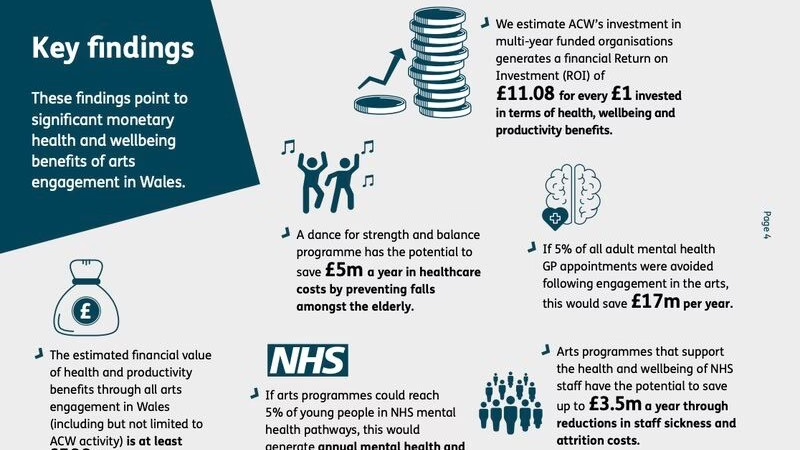
- £11.08 return for every £1 invested (!!!)
- £17m annual savings from reducing GP mental health visits (by just 5%)
- £588m in wider health and productivity value
This is system-level, system changing ROI.
So why isn’t this being scaled through Social Value?
Because most programmes start too late.
They start with services.
With offers.
With the assumption people will engage.
But the biggest barrier in health and in education isn’t always access.
It’s participation.
And as we see time and again, Social Value often reaches those who were already going to show up.
The shift: build participation, then outcomes follow
If you want to reduce NHS pressure or tackle inequality, you have to start earlier.
With the conditions that make engagement possible:
Engage → Belong → Connect
- Remove barriers to taking part
- Build connection and trust
- Then open pathways into health support, education, opportunity
This is participation infrastructure and without it, outcomes don’t stick.
Why this works across systems
In health, it reduces demand.
In education, it re-engages those who’ve been left behind.
In communities, it increases confidence, connection and participation.
Same mechanism.
Different outcomes.
Because when people feel they belong, they are far more likely to:
- seek support earlier
- stay engaged
- move towards opportunity
What this means for Social Value
Social Value is one of the few levers that can:
- invest in prevention, not just crisis
- reach communities the NHS and schools struggle to engage
- support workforce wellbeing before burnout escalates
- create measurable economic return
But only if it stops focusing on activity and starts building infrastructure.
The bottom line
The ROI for creative health is already proven.
The question is whether Social Value is ready and willing to deliver it at scale.
Because the organisations leading this space won’t be the ones doing more.
They’ll be the ones who can say:
“Here’s how we reduced demand on the NHS.”
That’s what creative health makes possible.
If you’d like to reach further and create more change, I’d be very happy to have a chat.
Image credit: Arts Council of Wales